
Biomolecule Separation
Resins for biomolecule separation
Redstone develops polymeric resins with a rigid structure and large pores, for binding, separating and purifying large biomolecules. They are aimed at analytical work and, more importantly, at preparative clean-up.
Typical targets are proteins, enzymes, antibodies and oligonucleotides.
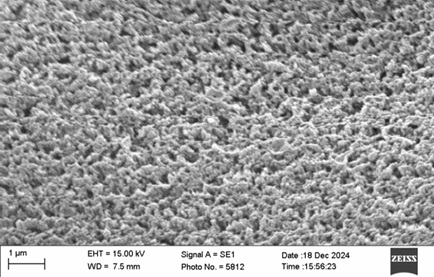
Scanning electron microscopy of the new resin. The resin is characterized with open pores up to ca 0.2 µm. BET pore analysis confirms the macroporosity of the material.
Preview of a new protein separation resin prototype
An example of biomolecule separation using a new type of polymeric resin is shown here. The separation utilizes the hydrophobic properties of the resin. With its new surface hydrophobicity / hydrophilicity it may constitute an alternative to current reversed phase or HIC separation materials. More info upon request, so just contact us.
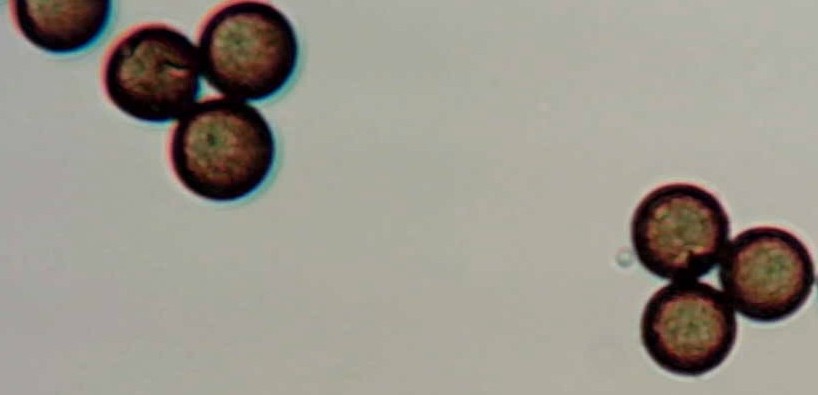
Light microscopic picture of 50 µm particles. The large pores give the beads a rough surface appearance.
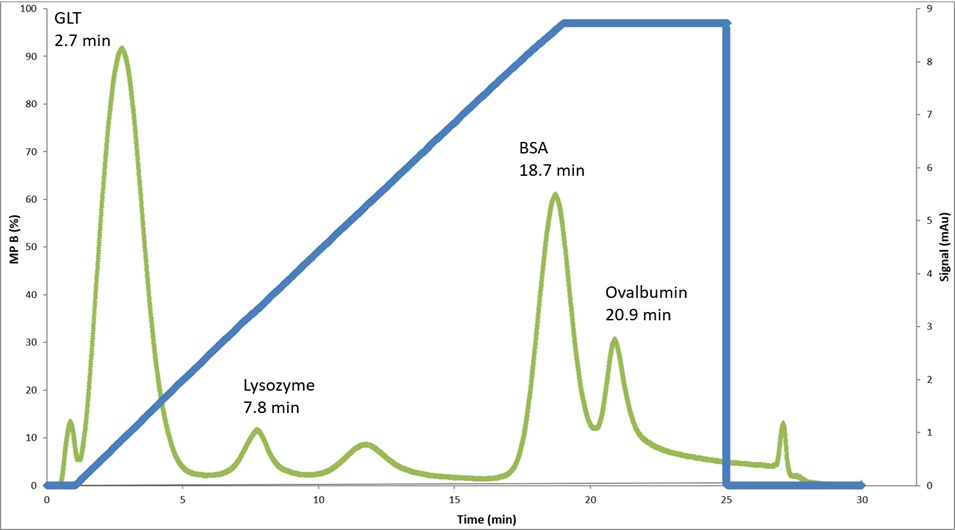
Concept material study: chromatographic bioseparation of a set of common peptides and proteins using a pH gradient combined with organic solvent gradient. Taken from Master Thesis, conducted at Lund University (Martina Henning 2026).
Method: Particle size ca 50 µm, packed in 10 cm column, id 2.1 mm. Mobile phases, gradient run (blue line): A: 20 mM NaAc, pH 5; B: 20 mM Tris/AcN 7:3 pH 11; Flow: 0.6 ml/min; Analyte conc: 1 mg/ml; Inj. vol: 50 µl.
Custom resins for biomolecules
We offer a service for custom made resins for biomolecules, and can supply at gram, kilogram and ton scale. Get in touch to discuss your separation.
Stay tuned for our first products to be launched.
TAILORED RESINS